 |
| Photo by teresia |
I thought it might be of interest to see the classes & books I took:
Classes I took:
Honors Biology 100
American Heritage100
Honors Book of Mormon 122
Introduction to Mechanical Engineering 191
Western American History in the 20th Century 361
Books mentioned in Winter Semester 2010

1890- book by Alfred Russell Wallace - sailed back to England on the ship Hannah after a trip up the Negro river to a place called Javita. His ship crashed and he got depressed because he lost all his specimens. The Negro and Orinoco converge, and when it rains sometimes the water goes down the Negro or the Orinoco. He wrote this poem:
'Tis where the streams divide, to swell the floods
Of the two mighty rivers of our globe ...
... and see my children grow like young fawns,
In health of body and in peace of mind,
RICH WITHOUT WEALTH AND HAPPY WITHOUT GOLD
Javita, March 1851
 Poem from A River Runs Through It (river/fishing movie), book by Norman Maclean: "I am haunted by waters". So is Nelson because he spends his life in the river. He's worked on his life so he could study what he loves, not what he could make. He can tell you quality of water in a stream by studying stone flies.
Eats Shoots and Leaves - best seller grammar book

Dr Nelson is reading For Whom the Bell Tolls by Hemingway

Natural theology, 1871, by Rev. William Pele – different feelings between kicking over a stone vs a watch. Carried by Darwin on the Beagle.

On Zion’s Mount, by Jared Farmer – history of UT valley
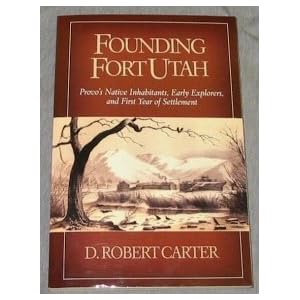
Founding Fort Utah, by Robert D. Carter – history of settling Provo

 Book, Faith of a Scientist – by Eyring – ran a foot race with all graduate students & was competitive until his 90’s
Book by E.O.Wilson Diversity of Life – READ!! You aren’t sure when it will be important!

Naturalist – book about E.O.Wilson – notes – marking books – it’s not just for scriptures any more!

The 10 Best Closing Arguments book about lawyers closing arguments – Nuremburg trials, etc.

Walter Nugent book, Into the West, p 148 map of Frontiers of Settlement, 1900-1930 – shows where settlements happened

1902 book, Campbell’s Soil Culture Manual, taught how to dry farm – taught 6-12“deep plowing, compacting the subsoil (using subsurface packer), facilitating germination of the soil and growth of the crops in the soil, frequent cultivation of the surface to create a heavy mulch, let ½ of your land rest every other year, drought-resistant varieties

Walter P Webb - from Texas - first looked at the West as a place or region. He was a high school / University teacher & wrote the book, The Great Plains.

Annette Kolodny, a more recent scholar- looks at the west associated with feminine qualities, book- The Lay of the Land

Gerald Nash - a professor from University of NM - wrote the 1st book about the history of the West, 20th Century West - An Urban Oasis. Argued that the West was urban from the beginning. He pointed out that the West is the pacesetter of the Nation & cited the rise of conservatism in CA and Hollywood.

Patricia N. Limerick - the 38th president of the Western History Association - wrote a book, Legacy of Conquest. She is a professor of History at University of Boulder, CO. She argued that while Turner divided eras in Frontier/Post-Frontier, you can become stranded and die today just as easily as you could in 1890. She said, "the West is a permanent case study of conquest, and its consequences" It is a messy story. People try to do the right thing, then mess up.

Paula Nelson and her book on homesteading in the Dakotas- says how modern differed from old (after 1900)

Populist involvement in the Dry Land movement – book No Privileged Class by Stanford Layton

Book: Water in American Government, by Donald Pisani
Book: by Donald Worster

Book Instant Cities by Gunther Barth – focuses on LA, Denver, & San Francisco- boomtowns (gold, silver, religious freedom (SLC), therefore, lots who came to these cities, didn’t intend to stay, led to shabby origins, haphazard layout, etc.

A slight case of cultural confusion chapter in book by Cary McWilliams - brush on hillsides cleared off hillsides, allowed erosion, replaced with imported plants – built homes with deep basements, even though no furnaces were needed, and steep roofs like back east. Bungalows became popular – steep pitched roof (weird in CA), big porches/verandas (great for India, but not the cool CA evenings).
Pamela Kerberheg’s book-places most vulnerable was where the soil was bare.

Paul Sears book Deserts on the March – an ecologist – most popular ecological book in the 1930’s – says there is a vast beautiful continent and a climax community a community had developed on the North American Continent - talking about the Great Plains and particularly the southern plains (the dust bowl region)- that grasslands supported all the animals, plants, etc – the farms had scraped all that off & it was our own fault that the dust bowl happened

1984 2 books Donald Worster blames the dust storm on humans (human greed) /Capitalists who “busted or broke the land” - 3 ideas that made humans responsible for the dust bowl – 1) nature is capital ($$) and should be seen as how much you can make from it; 2) humans have an obligation to self-advancement using nature – to take what nature gives them bounteously & make wealth from it; 3) the government should approve and encourage the pursuit of wealth – should not stand in the way.

Paul Bonnefield says the story of the dust bowl is the chronicle of great people who put up with the stuff the weather put out on them, while living through a devastating depression & an unfeeling government. Nature is to blame; the people are the heroes - the people are the ones who fought the battle.

Richard Lowitt’s book re great planes

James Gilbert & Peter Kuznick, 2001 book Rethinking Cold War Culture
Table 6.1 Number of Military bases in Western states for 3 time periods, from a book by Timothy M. Chambless
Improved varieties of crops & animals – hybridization – genetics – from book The Beginning of the Modern Era pg. 305 – double-cross hybrid – leads to larger, healthier, & more disease resistant crops

Erica Basumic book Indian Made – looks at Indian jewelry throughout history
Improvement Era p. 37 (March 1934) "The Indians and the New Deal" By John Collier U.S. Commissioner of Indian Affairs


Vine DeLoria – Self – determination – wrote book in 1969 Custer Died for Your Sins calling for Indian people to determine for themselves what they were to be
Book Power Shift by Kirkpatrick Sale talked about sunbelt vs. NE – argued that if you look at Presidential politics, economics, etc, you can see a shift toward the South & West
Come back later for more semesters!


No comments:
Post a Comment